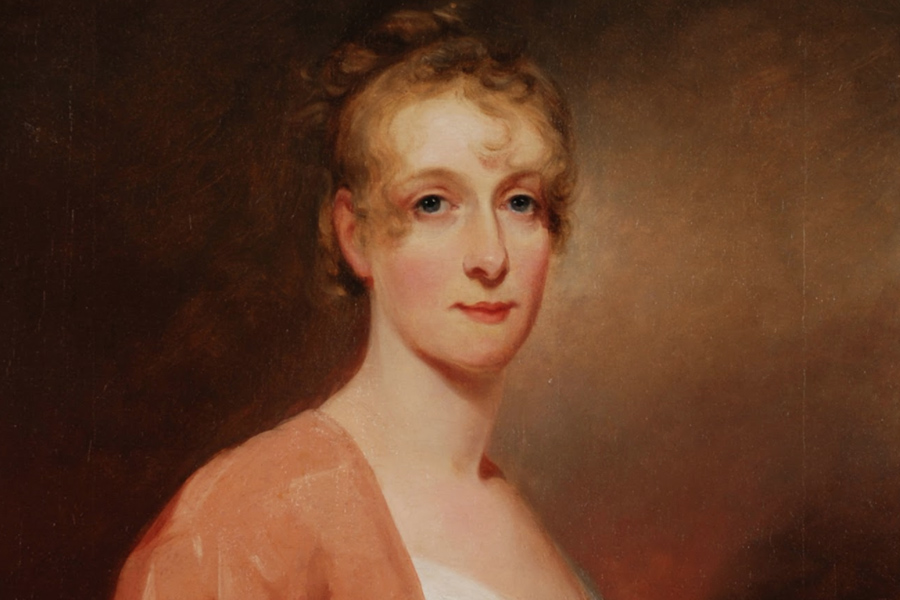
The woman behind a historic household
I perceive Cornelia Schuyler as a quiet figure at the center of a powerful world. Her life spanned the colonial and early republic eras, from 26 July 1746 in Albany, New York, to 1822. Her family was one of New York’s most influential, and their origins spread beyond politics, trade, landholding, marital alliances, and the early history of the United States.
Cornelia married Walter Livingston on March 13, 1767, and they raised a state-relevant family. Teviotdale was more than a house. It was a stage, shelter, and status symbol. It housed George and Martha Washington, held great crowds, and chronicled the family’s rise, struggle, and survival. Cornelia did not leave a public post or commercial record like males of her circle, but her influence is evident in the household she helped form and the descendants who carried the family name.
Cornelia Schuyler’s family line
To understand Cornelia, I have to follow the people around her. Her world was not narrow. It was a branching family tree with many bright and complicated limbs.
| Family member | Relationship to Cornelia | Notes |
|---|---|---|
| Pieter Schuyler | Father | Member of the Albany Schuyler line |
| Gertrude Schuyler Cochran | Mother | Later married Dr. John Cochran |
| Pieter P. Schuyler | Brother | Part of her immediate Schuyler family |
| Walter Livingston | Husband | First Speaker of the New York State Assembly |
| Henry Walter Livingston | Son | Lawyer, politician, and U.S. Representative |
| Maria Livingston Livingston | Daughter | Married Philip Henry Livingston |
| Peter Schuyler Livingston | Son | U.S. Congressman |
| Robert L. Livingston | Son | Connected to landholding, finance, and steamboat enterprise |
| Gertrude Livingston Cutting | Daughter | Married William Cutting |
| Harriet Livingston Fulton | Daughter | Married Robert Fulton and later Charles Augustus Dale |
Her father, Pieter Schuyler, placed her firmly in the Schuyler family, one of the great names of colonial New York. Her mother, Gertrude Schuyler Cochran, deepened that network, and later the family’s ties expanded through her mother’s remarriage to Dr. John Cochran. That meant Cornelia was connected not only by blood, but by marriage, to a wide circle of elite colonial and early national families.
Her husband, Walter Livingston, was just as significant. He was born in 1740 and died in 1797. He held political power, served as the first Speaker of the New York State Assembly, and managed substantial property. His life and Cornelia’s were tied to Teviotdale, the estate built in 1774 on inherited land. Their marriage joined two major family lines, and the result was a household with gravity. People and property seemed to orbit around it like planets around a sun.
Walter Livingston and the life at Teviotdale
Walter Livingston was the kind of man whose biography can be read in the outline of a house and a tract of land. He inherited a large estate, built Teviotdale, and lived in a world where land was wealth, influence, and identity. Cornelia stood at the heart of that world.
Teviotdale mattered because it was not just a building. It was a family center, a place where public life and private life blended together. Around 1790, George and Martha Washington visited there, and the household was large enough to include many occupants. That detail alone gives a sense of the scale. Cornelia was not running a quiet country retreat. She was helping sustain a major domestic establishment in a turbulent era.
Walter’s financial life was also unstable in ways that show how fragile elite status could be. He became involved in banking and speculation, ran into trouble in 1794, and lost the home. The brothers later repurchased it for one dollar, a dramatic gesture that feels almost theatrical, like a candle relit after a storm. Through it all, Cornelia remained tied to the household and family identity, even when fortune shifted under their feet.
The children of Cornelia Schuyler
Cornelia and Walter had a large family, and the children carried their lineage into politics, commerce, and marriage alliances.
Henry Walter Livingston became a lawyer and politician. He also served as a private secretary to Gouverneur Morris in France and later represented New York in Congress. In him, I see the family’s political line continuing with polished force.
Maria Livingston Livingston married Philip Henry Livingston in 1788. Her name itself reflects the dense family pattern of the era, where repeated surnames were common and family memory was built into naming.
Peter Schuyler Livingston entered national politics as well and became a U.S. Congressman. He married Eliza Barclay, extending the family’s web even further.
Robert L. Livingston followed a different path, one that touched land, business, and the early transportation age. He served as private secretary to Robert R. Livingston in France and later became associated with the North River Steamboat Company. The family was moving with the tides of a new century.
Gertrude Livingston Cutting married William Cutting. Their children included Francis Brockholst Cutting and Robert Livingston Cutting, both of whom became notable in their own right. Francis entered public life as a U.S. Representative, while Robert became a banker and stock exchange president. That line shows how Cornelia’s influence rippled forward into finance and politics.
Harriet Livingston Fulton is one of the most vivid descendants. She married Robert Fulton in 1808 and later Charles Augustus Dale. Her marriage linked Cornelia’s family to one of the great names of American invention and steam navigation. Harriet also had children with Fulton, including Robert Barlow Fulton, Julia Fulton Blight, Cornelia Fulton Crary, and Mary Fulton Ludlow. Through Harriet, Cornelia’s household touched the age of invention like a hand brushing a bright wire.
Cornelia’s place in family history
I doubt Cornelia’s story involves public remarks or formal institutions. It is more domestic and enduring. She was a big family hub. She lived when spouses and mothers were typically shadows beside male names in historical records, but the shadows were deceiving. Her household required forethought, stability, diplomacy, and emotional endurance.
Her story shows how early New York elite families were braided rivers. Schuylers, Livingstons, Cochrans, Cuttings, and Fultons united. Marriage went beyond personal. This was structural. It linked land, influence, and generations. Cornelia was in the center. Daughter of a strong family and mother of another.
A compact family map
Here is the family pattern in a simple form:
| Branch | Key names |
|---|---|
| Parents | Pieter Schuyler, Gertrude Schuyler Cochran |
| Sibling | Pieter P. Schuyler |
| Spouse | Walter Livingston |
| Children | Henry Walter Livingston, Maria Livingston Livingston, Peter Schuyler Livingston, Robert L. Livingston, Gertrude Livingston Cutting, Harriet Livingston Fulton |
| Grandchildren and later line | Francis Brockholst Cutting, Robert Livingston Cutting, and the Fulton children through Harriet |
This map helps me see Cornelia not as a single figure isolated in time, but as the hinge of several generations. A hinge may look small, but it lets a great door move.
FAQ
Who was Cornelia Schuyler?
Cornelia Schuyler was an American woman born around 1746 in Albany, New York, and she became part of the Livingston family through her marriage to Walter Livingston in 1767. Her life is best understood through her family ties, her household at Teviotdale, and her role as the mother of several notable children.
Why is Cornelia Schuyler historically important?
She is important because she sat at the center of a powerful network of families in colonial and early national New York. Her descendants became politicians, financiers, and figures connected to major American developments, including the steamboat age. Her life also reflects the domestic side of elite history, where the home was a place of influence.
What was Teviotdale?
Teviotdale was the Livingston family estate built in 1774 on inherited land. It served as a major family residence and a social center. Cornelia lived there with Walter Livingston and their children, and the house became associated with major figures and key family events.
How many children did Cornelia Schuyler have?
The best documented children are Henry Walter Livingston, Maria Livingston Livingston, Peter Schuyler Livingston, Robert L. Livingston, Gertrude Livingston Cutting, and Harriet Livingston Fulton. Some accounts describe the household as larger, with eleven children raised at Teviotdale, while six are most clearly traced in the records.
Did Cornelia Schuyler have a public career?
No formal public career is clearly recorded for her. Her work was largely domestic and familial, but that should not be mistaken for insignificance. She helped sustain a major household and a powerful family line during a time of political upheaval and financial uncertainty.
What made her family so notable?
The Schuyler and Livingston families were deeply involved in colonial and early American society. They held land, served in politics, formed strategic marriages, and produced descendants who continued to shape public life. Cornelia was one of the family members who connected these lines and carried them forward.